A Street Changes One House at a Time
Nobody notices a neighborhood turning over. They notice the dumpster.
The Brant Team · July 23, 2026 · 6 min read
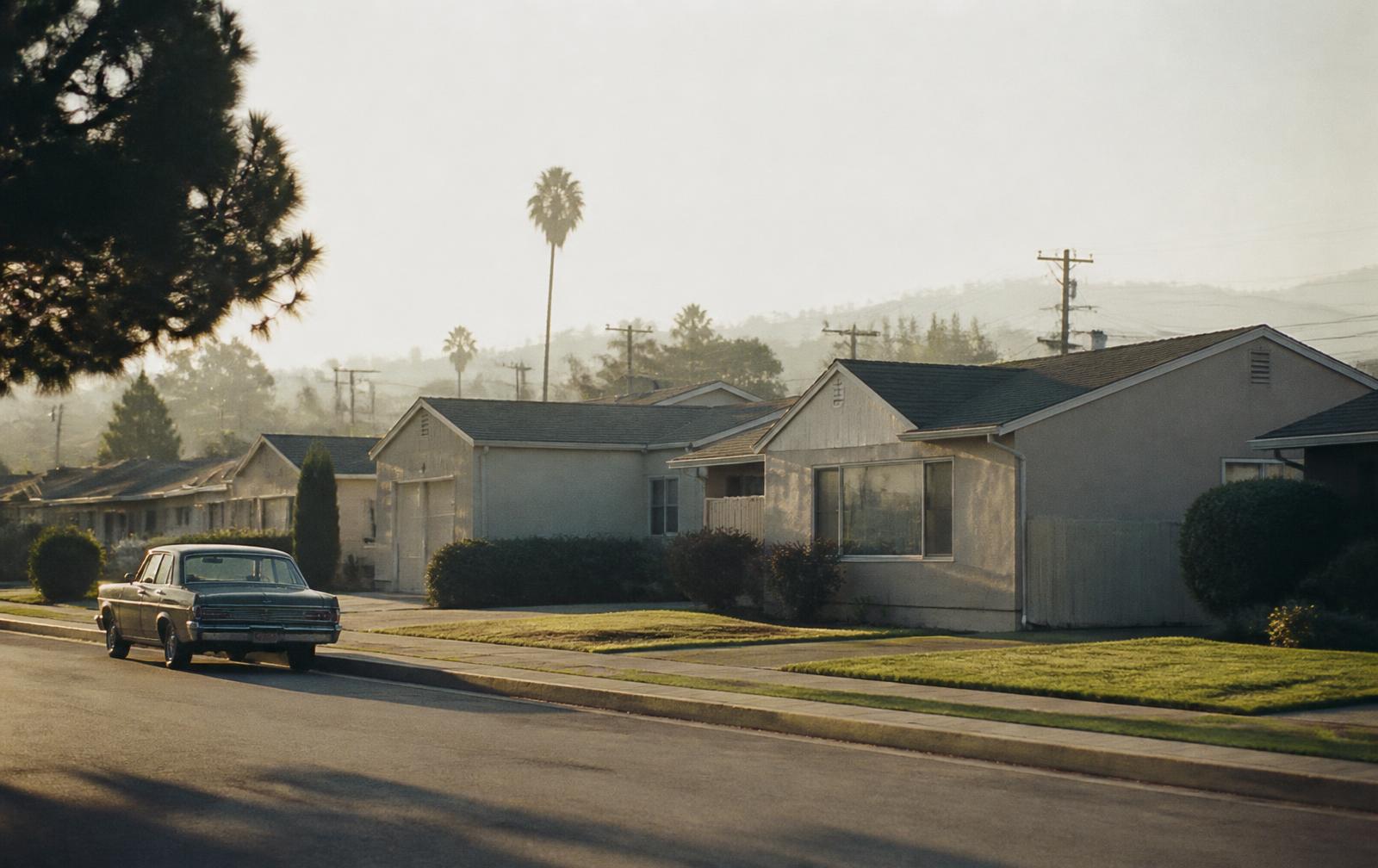
A street does not change the way people talk about change. There is no announcement, no before-and-after. There is a dumpster in a driveway on a Thursday.
Then it is gone, and the house has different windows.
The vocabulary of small alterations
If you walk the same residential blocks for long enough, you learn to read them. The signals are minor and completely consistent.
A lawn replaced with drought planting. A garage door swapped from four hinged panels to a single flat one. Roll-up shutters. A new mailbox — new mailboxes are almost always a sign of new ownership, because nobody who has lived somewhere for thirty years thinks about the mailbox. Grass gone, gravel in. A second story where there was not one, which changes the light on the house next door for the rest of its existence.
None of these are events. Collectively, over eight or ten years, they are a different street.
Nobody notices a neighborhood turning over. They notice the dumpster.
What stays
What is interesting is not what changes but what refuses to.
Street trees outlast almost everyone. Sidewalk seams stay cracked in the same places for decades and become, for the kids who grow up skating them, a kind of permanent map. The corner where everyone parks badly stays the corner where everyone parks badly, no matter who owns the corner house.
The layout itself — the lot lines, the width of the street, the way the block was subdivided by someone in an office a very long time ago — is essentially immortal. Households come and go inside a geometry that nobody living has ever met.
The turnover nobody schedules
Residential blocks tend to be built at once and occupied at once, which means their households age at roughly the same rate. This produces a quiet clustering effect: a street can be stable for thirty years and then move considerably in five, not because anything happened to the neighborhood but because a generation reached the same decade together.
The children who grew up on that street were the ones playing in the cul-de-sac in the same era. Then the cul-de-sac is quiet for twenty years. Then, one day, it isn't again, because the houses have turned over and there are new bikes on their sides in the same driveways.
Anyone who has watched a neighborhood long enough has seen this cycle at least once. It is oddly reassuring. A street is not a group of people; it is a container that groups of people pass through, and its rhythm is generational rather than personal.
Being the one who stays
There is a particular position in all this that gets very little attention: the household that does not move.
Staying put on a changing street is its own experience. You become the person who remembers what the corner house looked like before, who knows which tree came down in which storm, who can tell a new arrival why the driveway at number 12 is poured the way it is. You are consulted, informally, about the past.
You also watch a lot of people leave. Not dramatically — people just aren't there anymore, and a truck came on a weekday while you were out. The block keeps its shape and loses its cast, gradually, and there is no ceremony for it.
Reading a street honestly
The temptation, when writing about neighborhood change, is to reach for a verdict: it's better now, it's worse now, something has been lost, something has been renewed. Most of those verdicts are more about the person delivering them than the street.
What is defensible is smaller. A block is a slow accumulation of individual decisions made by people who were mostly thinking about their own kitchen. Nobody on the street voted for how it looks today. Everybody contributed to it.
Which is a strange and rather democratic fact, and it is visible on any weekday morning, in any older neighborhood, to anyone willing to walk it twice a year and pay attention to the mailboxes.
- #huntington beach
- #neighborhood
- #change