What We Keep
Why the least valuable object in the house is the hardest one to put down.
The Brant Team · August 6, 2026 · 5 min read
Somewhere around the third box, value and worth quietly part ways.
The good china — eight place settings, gold rim, used four times — turns out to be easy. Nobody wants it, including the people who own it, and the market has been clear on this point for years. It goes.
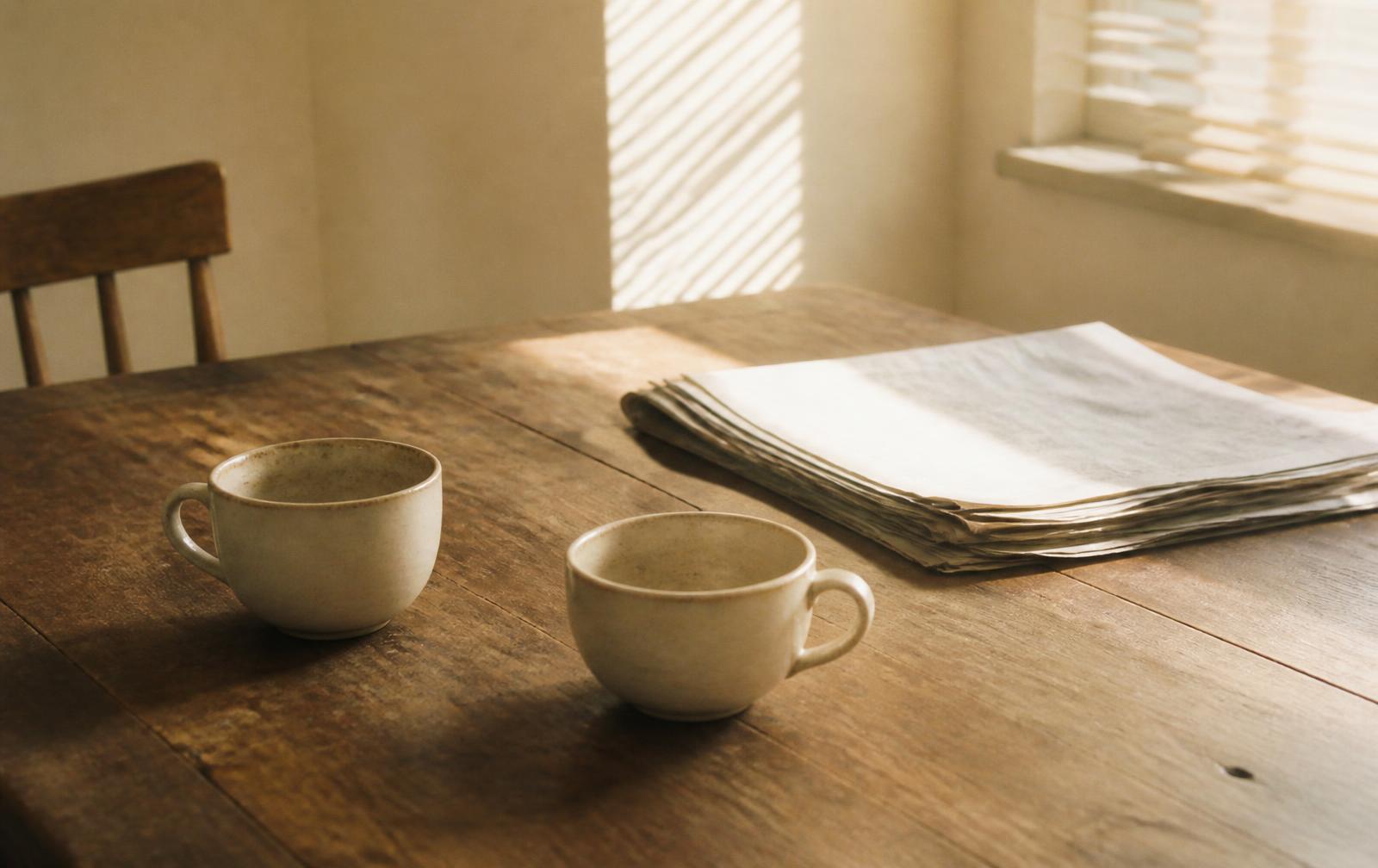
The chipped mug stays.
This is not sentimentality being unreasonable. It is a different accounting system, and it is remarkably consistent from house to house. Objects that were used daily outrank objects that were saved for good. Objects with a specific person attached outrank objects with a category attached. Objects that record an ordinary morning outrank objects that record an important occasion.
The rule of the hand
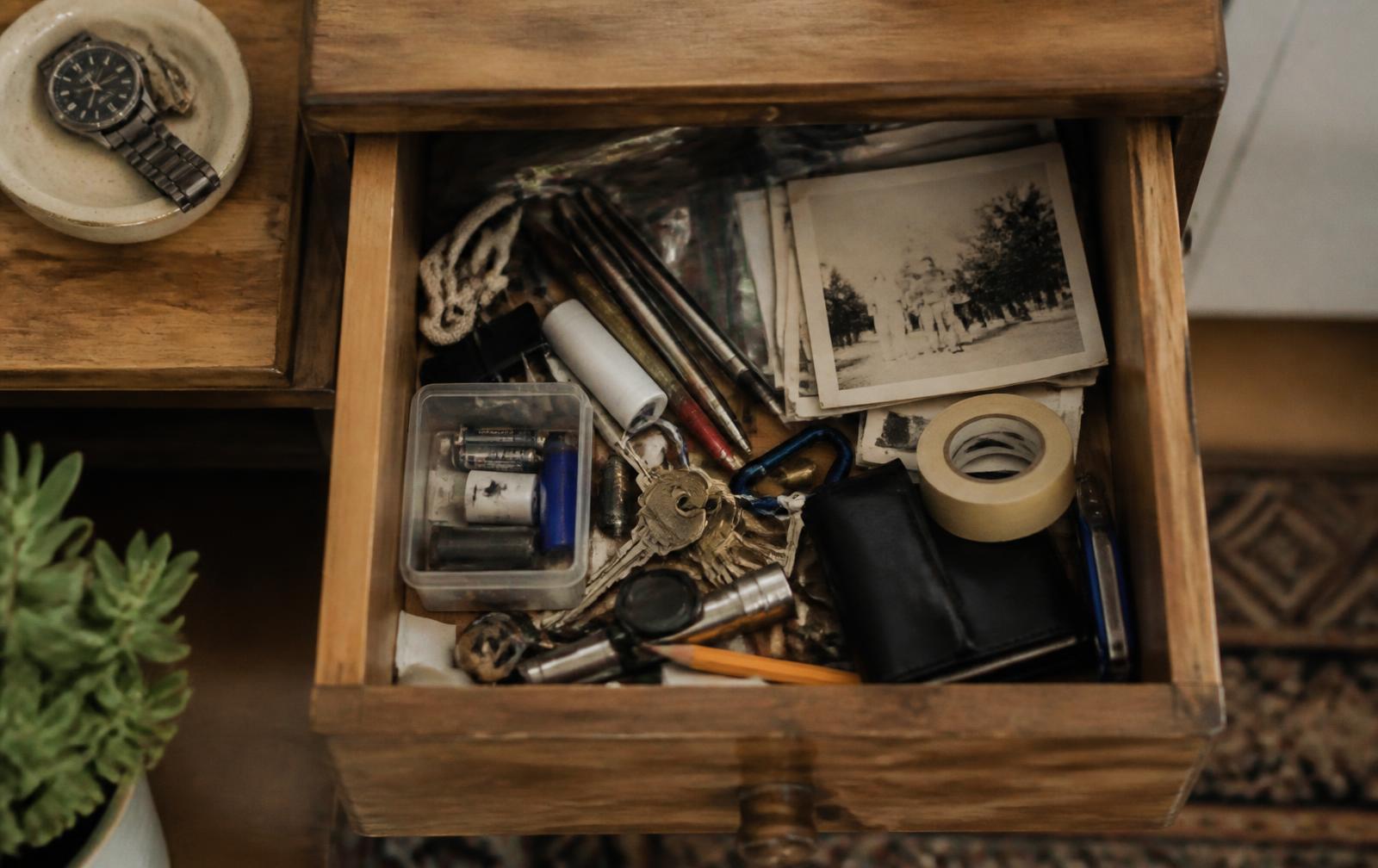
Part of it seems to be physical. The things that survive a sort are, over and over, the things that were held: a wooden spoon worn flat on one side, a tool with a handle darkened in exactly one grip, a book that opens by itself to a particular page.
An object that has been used has been shaped by a person, and that shape is a kind of record. You can see where someone's thumb went. It is difficult to throw away evidence of a thumb.
Objects that record an ordinary morning outrank objects that record an important occasion.
Objects that were preserved, by contrast, carry no such evidence. The unopened set, the boxed keepsake, the plate hung on a wall — they were protected from use, and so they never absorbed anyone. They photograph beautifully and mean almost nothing.
Why "just take a picture of it" rarely works
The standard advice is to photograph the object and let the object go. Sometimes this works. Often it does not, and it is worth being honest about why rather than treating people as sentimental for resisting it.
A photograph preserves how something looked. It does not preserve weight, temperature, the sound of a lid, the specific resistance of a drawer. Much of what people are actually holding onto is not visual at all. It is tactile and auditory, and it lives in the object rather than in the picture of it.
Which suggests a gentler version of the same idea: instead of photographing everything, choose the small number of objects that carry the most, and let those be kept properly — used, out on a shelf, in a rotation — rather than boxed. A kept object that lives in a box is not really kept. It is stored.
The pile that isn't a decision
The hardest category is not "keep" or "let go." It is the third pile, the one that forms without being named: things nobody can decide about yet.
Households tend to feel bad about this pile. They shouldn't. In practice it functions as a pressure valve; without it, sorting becomes a series of final verdicts, and final verdicts are exhausting. The pile lets a household keep moving.
The only thing worth watching is whether the pile is temporary or structural. A pile revisited in two weeks is a tool. A pile that gets shrink-wrapped and moved to a storage unit for six years is a decision that has been made without anyone admitting it — usually at a monthly cost that eventually exceeds the value of everything inside.
Choosing forward instead of backward
There is a reframe that seems to help, and it is small. Instead of asking what to give up, ask what the next place is for.
The question sorts differently. A person setting up a smaller kitchen they intend to actually cook in will keep the two good pans and release the rest without much grief. A person defending a lifetime of accumulation will fight for all of it, because the terms of the argument have made every object a casualty.
Nothing about that is a trick, and it doesn't make the sorting quick. But it changes what the boxes are for. One version is a subtraction. The other is a design problem, and design problems, unlike losses, have good answers.
- #belongings
- #memory
- #downsizing